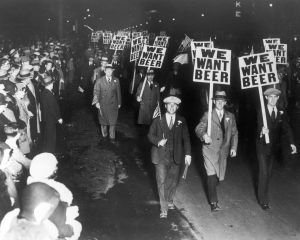
 http://www.beerbooks.com/images/products/med/4129.jpg

http://media.collegepublisher.com/media/paper287/stills/x7d0698m.jpg
Nowadays, the problem is not so much keeping the alcohol away from society as it is keeping it out of the hands of those under 21. Most college students are right at the edge of the legal age, but that doesn’t stop them. On college campuses across the country, underage drinking is becoming a serious problem. Students have a perception of college life as one big party like it is portrayed in movies such as Animal House and music like Asher Roth’s “I Love College.” Students come into college thinking that everyone is experimenting with drugs and alcohol, which simply isn’t true.

http://www.politefiction.com/wp-content/uploads/2008/06/animal_house.png
Several researchers have come up with potential solutions. For example, Henry Wechsler, a social psychologist at Harvard University, wants to implement a prevention program known as “environmental protection”(Park 1). This program would attack all that promoted alcohol to underage drinkers such as local bars and liquor advertisers. The program would provide dorms that are free of alcohol. Wechsler wants to keep alcohol as hidden from those under 21 as possible. This includes training restaurants how to handle underage drinkers and going after businesses that break the minimum drinking age laws.
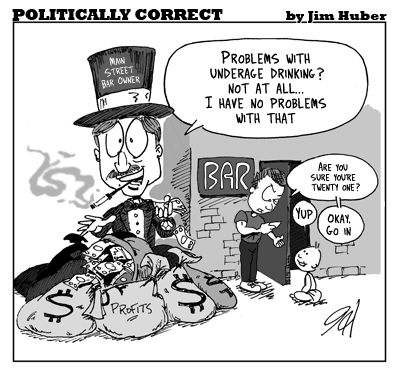
 http://www.conservativecartoons.com/1994/bars.gif
Another approach is the “social norms” strategy. This program would serve as a campaign to inform students that their peers do not consume as much alcohol as it appears in the media.This method was introduced by H. Wesley Perkins and Alan D. Berkowitz. Berkowitz describes the definition of the social norms strategy by stating, "our behavior is influenced by incorrect perceptions of how other members of our social groups think and act." This method is based on the effects of peer pressure. Berkowitz states, "Social norms interventions focus on peer influences, which have a greater impact on individual behavior than biological, personality, familial, religious, cultural and other influences." This strategy depends on changing the way incoming college students see the party atmosphere. Social norms would try to bring truth to the misperceptions of college drinking by showing students that not all of their peers participate in this illegal behavior.





No comments:
Post a Comment